Home Depot Shelf Intelligence for Brands
Store-level competitive data from The Home Depot. Every SKU in your category, priced store by store across your regional footprint, delivered weekly. The same program a national building products brand has run for more than five years.
Big-box, marketplaces, and specialty retail.


Disclaimer: All product, logos, and company names are trademarks™ or registered® trademarks of their respective holders. Use of them does not imply any affiliation with or endorsement by them.
Every SKU. Every Store.
Every Week.
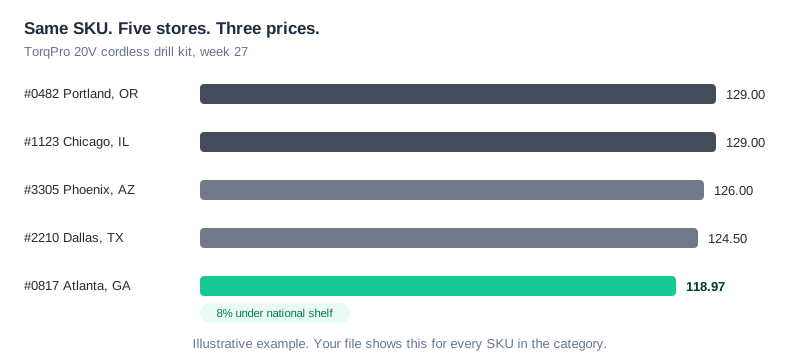
Home Depot pricing is not national. Your comp shop should not be either.
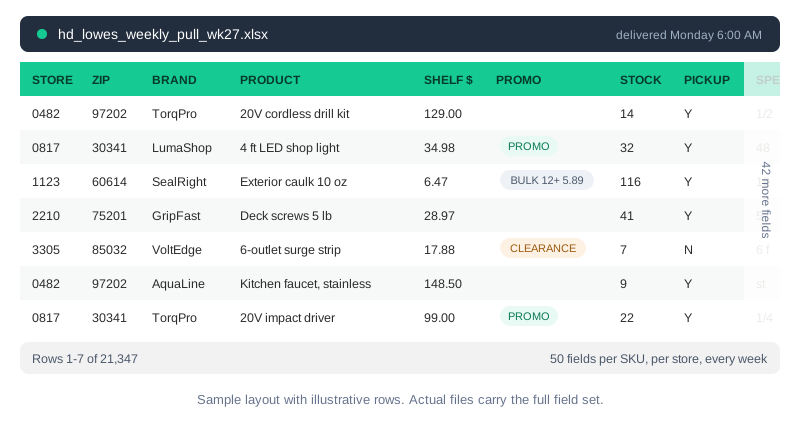
Home Depot prices by store and by regional pricing zone, so the same competitor SKU can sit at three different prices across your territory. A single weekly pull runs 20,000+ rows with 50 fields per SKU: shelf price, bulk-break pricing, promo flags, in-store stock and pickup counts, and full product specs, matched to your store list.
Your Store List
Pick the Home Depot stores that match your regions. District managers see their own turf, and pricing teams see variation across markets.
Regional Price Zones
Home Depot adjusts pricing by market. We capture the store-level price, so zone-by-zone differences show up instead of averaging away.
The Hard Products Too
Non-UPC commodities like lumber and millwork, matched and tracked. The categories manual comp shops skip because matching them by hand is miserable.
Analyst-Ready Delivery
Clean tabular files your analysts drop straight into their own models and line-review decks. No portal lock-in.
Proven At Home Depot
For Over 5 Years.
This is not a beta. It is a weekly program that has run since 2021.
A national building products brand has used this exact program at The Home Depot for more than five years. Their national accounts, field service, and analyst teams all work from the same weekly file to catch competitor price moves, stock gaps, and promo pushes across every region where they compete.
Line-Review Ammunition
Walk into your Home Depot line review with store-level facts about competitor pricing and promo activity, not anecdotes from a store walk.
Promotion Tracking
Spot competitor promos the week they start, not the quarter after they worked.
Assortment Gaps
Track what competitors have on the Home Depot shelf that you do not, store by store.
Stock and Pickup Signals
In-store quantity and pickup availability show who is winning the shelf, not just who is listed.
How It Works
Store By Store, Not Site-Wide.
Set the store
We navigate homedepot.com the way a shopper in that market does and lock the session to one specific store from your list. Everything that follows is that store's view, not a national one.
Filter to what is actually in the store
Pickup filters on, "available nearby" off. Products stocked at other locations drop out of the picture, so what remains is the real assortment and pricing of the store you picked.
Walk the whole category
Every product on every page of the category, through all available next pages. Not a top-sellers sample, the full shelf.
Drill deeper when Home Depot cuts pagination short
On deep categories, Home Depot stops serving next pages after a point, which quietly truncates naive scrapes. When we hit that limit, we drill one level down and walk each subcategory, so big categories come back complete.
Repeat for every store, every week
The same crawl runs across your full store list in the same week, so store-to-store and week-to-week comparisons are apples to apples.
50 Fields Per SKU,
Per Store, Every Week.
Store and Product
Store number and market, brand, product title, model number, pack size, and category, so every row ties to a real shelf in a real store.
Pricing and Promotion
Shelf price, bulk-break pricing, per-unit math, promo flags, and clearance markers, captured the week they appear.
Availability and Specs
In-store stock quantity, pickup availability, and full product specs and dimensions, so assortment and inventory signals ride along with price.
Home Depot Comp Shop
Questions, Answered.
See The Format First.
The fastest way to evaluate this is to look at a scrubbed sample of the actual weekly Home Depot file. Ask for one, tell us your category and store footprint, and we will take it from there.
Founder-led, US-based.
You will work directly with the team that runs the scrapes. Scraping, development, and support are all in North America. No long-term contracts.
Selling through Lowe's too? The same program covers it: Lowe's shelf intelligence. Full program details: retail shelf intelligence.
